

How to Avoid Renovation Budget Overruns
How to Avoid Renovation Budget Overruns
Table of Contents
- Why Renovation Budget Overruns Happen and How to Prevent Them
- Build a Renovation Contingency Budget by Project Type
- How to Compare Renovation Quotes Accurately
- Use a Home Renovation Budget Spreadsheet to Track Every Dollar
- Set Up a Simple Renovation Change Order Process
- Plan Permits, Code Upgrades, and Lead Times Into Your Budget
- Keep Your Renovation on Budget
- Frequently Asked Questions
Last Updated: October 12, 2026
Why Renovation Budget Overruns Happen and How to Prevent Them
Most renovation budget overruns come from small surprises nobody planned for, homeowners set a number based on wishful thinking, not real costs.
A renovation budget overrun is the gap between what you planned to spend and what you actually pay by the time the last trade leaves site. It opens in four predictable places: hidden conditions, scope creep, thin contingency, and weak lump sum quotes. The fix: build a realistic budget, size your contingency, compare quotes line by line, and control spending once construction starts.
The single biggest cause of overruns is not bad luck. It is a budget built without a contingency line and a scope that was never frozen before work began.
Build a Renovation Contingency Budget by Project Type
A renovation contingency budget is money set aside on top of your construction estimate to cover unknowns, sized by how much of your home you open up.
| Project Type | Typical Risk Level | Contingency Range |
|---|---|---|
| Cosmetic refresh (paint, fixtures) | Low | 5-10% |
| Kitchen or bathroom remodel | Medium | 10-15% |
| Structural work (wall removal) | High | 15-20% |
| Full gut or older home | Very high | 20%+ |
Older homes carry the most risk, knob-and-tube wiring, asbestos, and undersized framing often only show up once walls are open, so if your home predates the 1980s, plan for the high end. Contingency is a cost line, not spare cash.
Do not roll your contingency into your finishes budget. Homeowners who do this almost always overspend, because the money is gone before the first surprise appears.
How to Compare Renovation Quotes Accurately
Comparing renovation quotes accurately means matching each bid line by line, not just the bottom number, the cheapest quote is often the one with the most gaps. Ask every contractor for a line-item breakdown, a clear scope statement, and a stated allowance for finishes with the brand and grade named, then build a comparison sheet marking “included,” “excluded,” or “allowance” in every cell. Red flags: no mention of permits or disposal, vague allowances, and no stated timeline or payment schedule.
Ask each contractor to price the exact same scope. If one bid includes a permit and another does not, you are not comparing quotes. You are comparing guesses.
Use a Home Renovation Budget Spreadsheet to Track Every Dollar
A home renovation budget spreadsheet is the simplest tool for catching overruns before they happen.
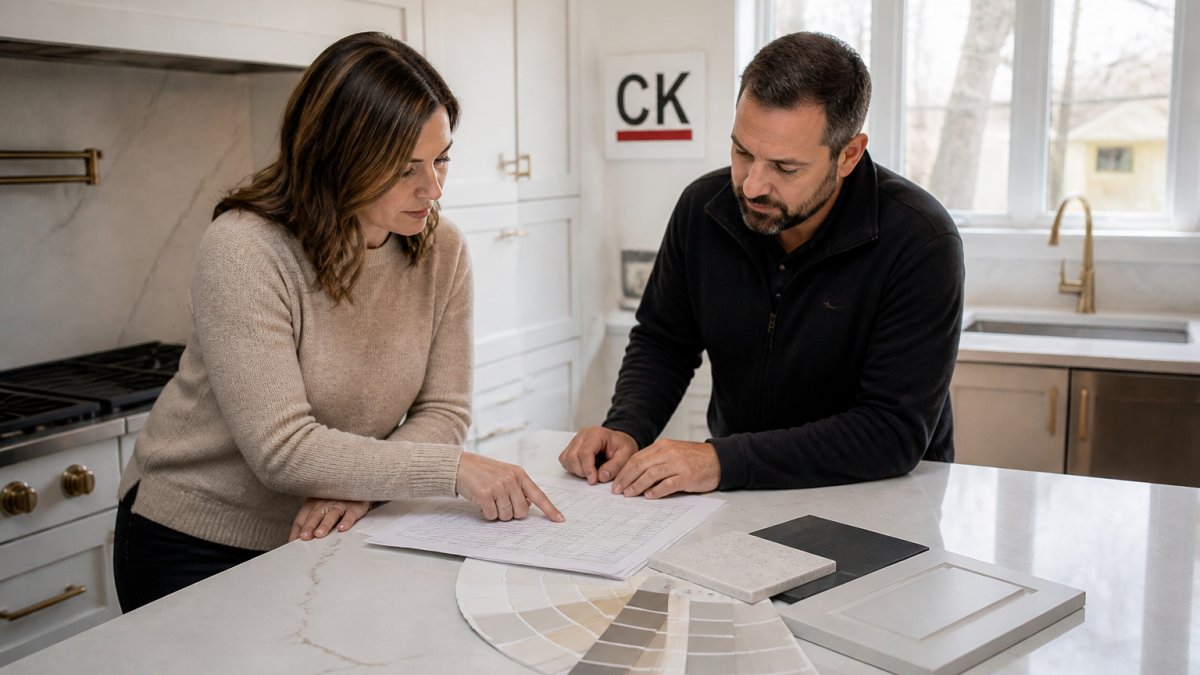
Set up five columns: Item, Budgeted, Committed (signed contracts and approved orders), Paid, and Remaining (budgeted minus committed), and update it weekly. The “committed” column matters most: a signed contract is money spent, even if you have not paid the invoice yet.
Get your project Started Today ! →
Track committed costs, not just paid costs. By the time money leaves your account, the decision is already made.
Set Up a Simple Renovation Change Order Process
A renovation change order process is a written approval step for any change to the agreed scope, without one, verbal “can you just…” requests turn into unpaid invoices and arguments. Request any change in writing, have the contractor price it with any timeline impact, approve or decline before work proceeds, then log it as a new committed cost. Classic kitchens has an online scheduling and change order software that makes all this easy!
Plan Permits, Code Upgrades, and Lead Times Into Your Budget
Permits, code upgrades, and lead times are budget risks, not paperwork. Permit fees vary by municipality, so check with your local building department; opening a wall can trigger electrical, plumbing, or fire separation requirements, and cabinets, tile, and fixtures can take weeks to arrive. Build a line for each into your budget from day one.
Keep Your Renovation on Budget
A renovation budget holds when you plan for surprises, freeze your scope, and track every committed dollar. Homeowners who stay on budget are not luckier, they are more disciplined about process.
If you are planning a kitchen or bathroom project in the Durham Region, Classic Kitchens can help you build a realistic budget from the start, whether that means a full kitchen renovation or a smaller kitchen cabinet refacing to keep costs down. Our in-house designers guide you through material and finish choices, and we handle structural loadbearing wall removals. Get started with Classic Kitchens and renovate with a clear number in front of you.
Frequently Asked Questions
What is the most common reason renovation projects go over budget?
Scope changes during construction are the leading cause. Homeowners decide to upgrade finishes, add features, or move walls after work has started, and each change adds labor and material costs. Hidden conditions in older homes, such as outdated wiring or water damage, also drive overruns. Setting a clear renovation budget with a contingency fund and approving changes in writing before work begins prevents most of these surprises.
How much contingency should I include in a renovation budget?
Most renovation planners set aside 10 to 20 percent of the total project budget as a contingency fund. Kitchen and bathroom renovations in older homes often need the higher end because of hidden conditions behind walls. If your project involves structural work like loadbearing wall removal, a larger contingency is wise. The key is treating that money as untouchable unless a genuine unexpected cost appears.